

Words and expressions, sometimes imbued with humor or poetry, immerse us in the history of Paris. Let’s take the time to explore together these terms that continue to bring the soul of the French capital to life through the ages.
Also, if you’d like to learn more about Paris and its history, you can book one of our cultural escape games, available in adult or children’s versions for ages 7 and up, in the Montmartre district, in the Sacré-Cœur Basilica, in the Covered Passages, or on the Île de la Cité.
Now let’s look at 22 etymologies that have their roots in Paris!
Chandail (sweater)
A sweater is a knitted item with or without sleeves that is pulled on over the head and ends at the hips. In the 19th century, the word “chandail” evokes the popular history of Paris during the time of Les Halles. This was long before fruit, vegetable, and meat vendors… were exiled to Rungis.
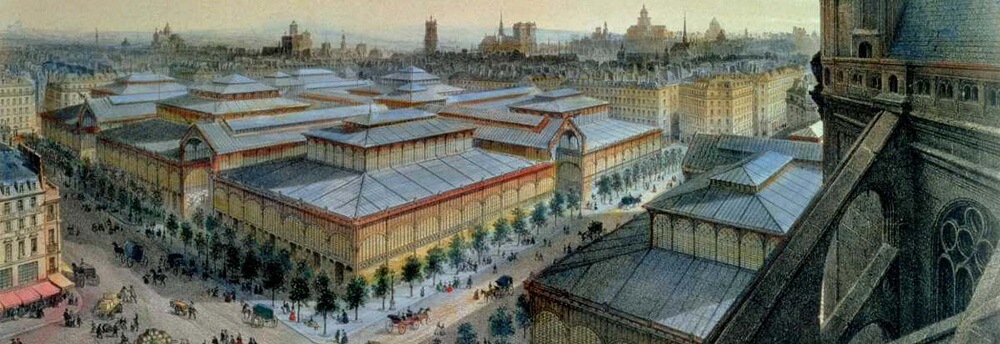
This immense market brought Paris to life thanks to its typically Parisian architecture. It featured 12 pavilions in the pure Baltard style, combining iron, cast iron, and glass.
Their construction began in 1852, and their dismantling was completed in 1973, making way for the Forum des Halles. For those interested in learning more about these Baltard pavilions, one of them, the one that housed the egg and poultry market, has been reassembled in Nogent-sur-Marne.
Zola, in The Belly of Paris (1873), masterfully describes the atmosphere:
“To the right, to the left, on all sides, the yelps of the fish market added high notes like a small flute amidst the muffled bass of the crowd. It was the tide, it was the butter, it was the poultry, it was the meat.”
The word “Chan d’ail” is a popular abbreviation of “marchand d’ail” -> “garlic merchant.” It referred to the workers at the vegetable market at Les Halles de Paris, and later, by metonymy, to the sweater they wore.
And what if we ask ourselves who is “the Fort of the Halle”? It’s not a larger-than-life street vendor, but it is indeed the first of the 12 Baltard pavilions, so nicknamed because of its massiveness.
Loufoque (weird)
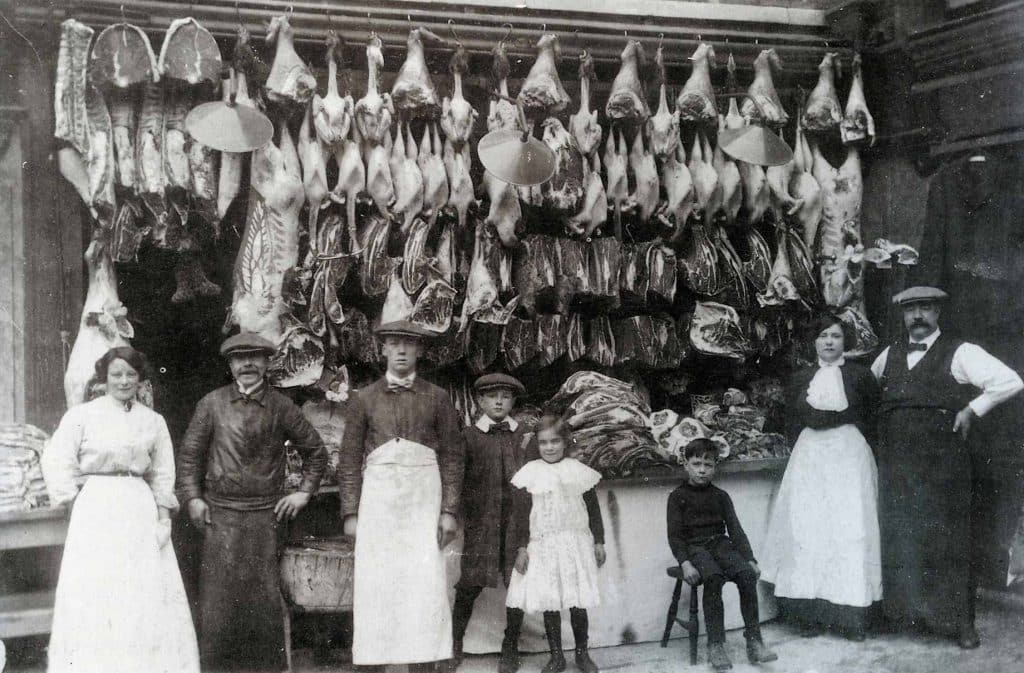
Among the words and expressions from the history of Paris, we find “Loufoque,” which means “a little crazy, original,” and bears witness to the working-class Paris of the 19th century. At that time, the greatest wordsmiths were… butchers! They cut butchers, larded them, and made a wonderful stuffing out of them.
The Parisian butchers’ guild had its own language: louchébem, that is, the largonji of louchébems (uh… butchers’ jargon).
This code consisted of adding a syllable “lem” or “loque” (or others!) to the end of a word and swapping the first letter of the word with the “l” in “loque,” “lem,” “li,” etc.
“Crazy” -> “Fou” thus became “fouloque.” By adding “loque,” then “loufoque,” and swapping the “l” with the “f.”
Lercimuch les larçongem louchéBem! This is an attempt to say in louchébem: “Thank you, butcher boys,” in case any members of this fine guild are reading this post!
Mansarde (attic)
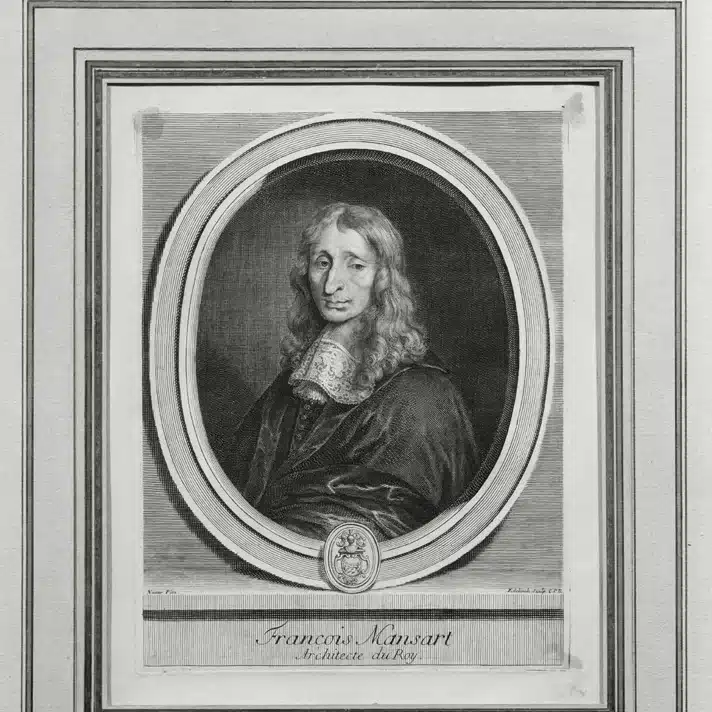
A “mansarde” ->”attic” is a room under the roof, a broken attic with one or two sloping walls. This 17th-century term, among the words and expressions in the history of Paris, was coined by François Mansart (1598-1666). Mansart was a French architect known for being the precursor of classical architecture in France.
Indeed, the word “mansarde” is derived from the name of its creator and meant:
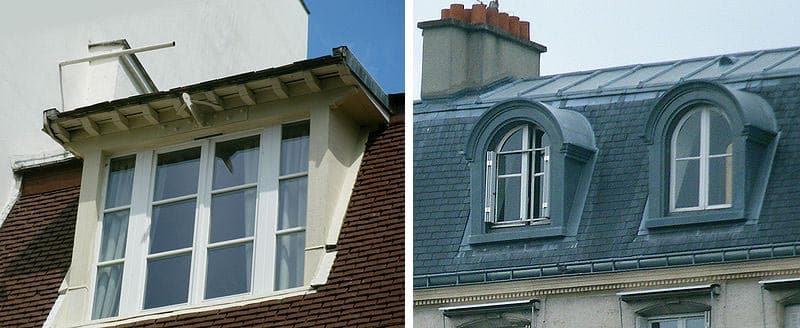
- Broken attic, whose sides are themselves broken. It is also called “attic in a mansard,” “à la mansarde,” or “à la Mansart.” By extension, “attic roof,” a roof covering such an attic. “Attic window,” a window made in the almost vertical part of a broken attic.
- Room converted under a broken attic, with one of the walls following the slope of the roof. Living in an attic, having only a small apartment under the roof.
Baraguiner
The word “Baragouiner” means “to speak incomprehensibly.” Do people “baragouine” in Paris? In bistros, when they’ve had too much to drink? No! And yet… This verb could well be a Parisian creation, and it has a connection to drinking establishments.
Let’s go back to the 19th century, when the beautiful regional languages were still very much alive but could also lead to comprehension difficulties when leaving their native lands.
A possible etymology of the verb “baragouiner” would therefore be linked to the Breton words: “bara” (bread) and “gouin”/”gwin” (wine). Breton soldiers, at the end of the Franco-Prussian War of 1870, reportedly had difficulty placing their orders in Parisian inns! To excuse themselves from their poor knowledge of the customers’ languages, the hosts then invented the verb “baragouiner.”
A link with the Latin “barbarus”, the foreigner, the one who does not speak the same language, also seems to be attested since we find forms of this verb “baragouiner” in texts prior to 1870. So, creation, recreation, crossing of etymologies? Let us continue to jabber on the subject and we will no longer be strangers to each other: this is indeed one of the objectives of the Libre Promeneur.

Midinette
Here’s another lovely word about the history of Paris, its inhabitants, its history, without it always being known.
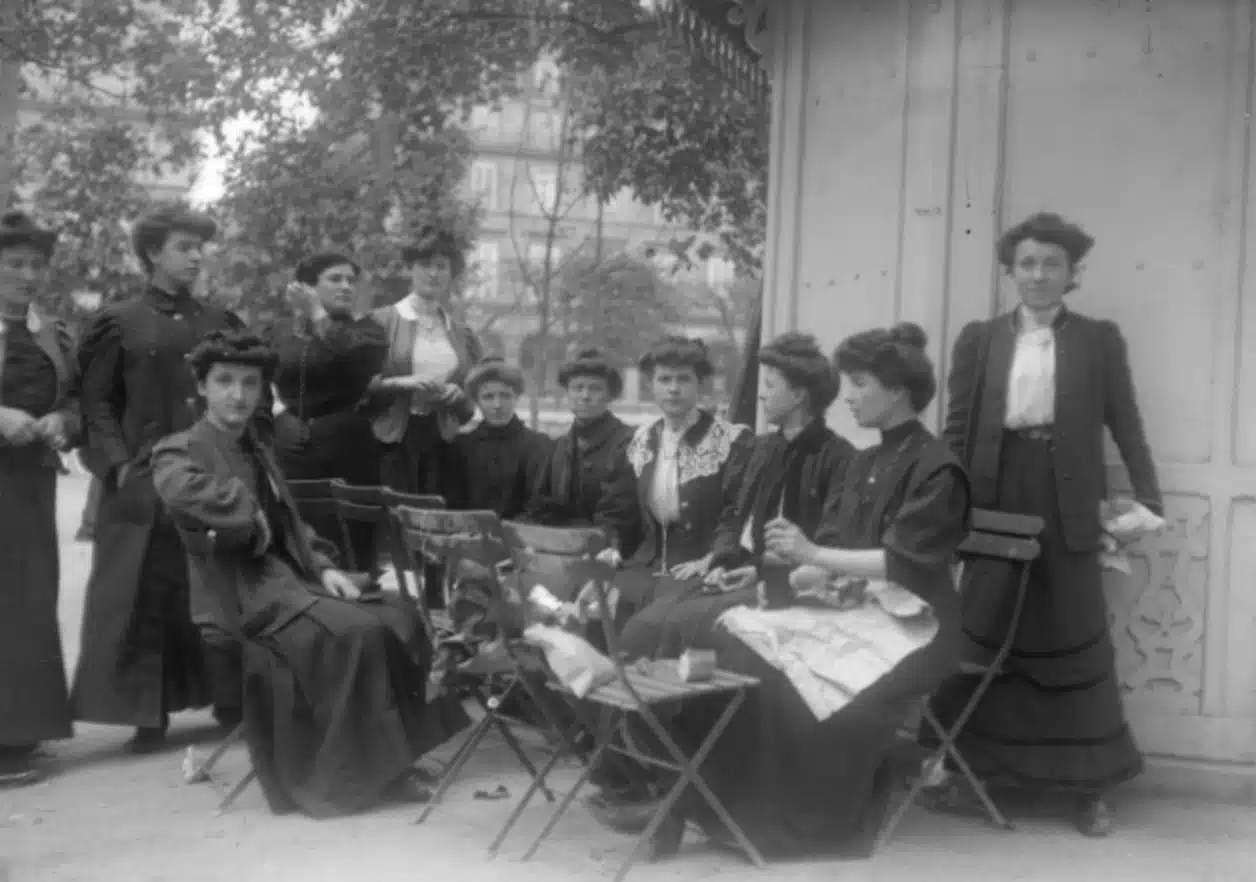
A “midinette” was a seamstress working in the Parisian fashion world.
This portmanteau word dates back to 1890. It is formed from two common nouns “midi” and “dînette,” because these young seamstresses had the custom of having a very small meal during their break. They would then make a small “dinette” at “noon” ->”midi.”
Here is a photo of a few midinettes making a dinette in the Tuileries Gardens. It was a scorching August, almost 120 years before the one we are experiencing.
Perhaps they worked for Jacques Doucet? The leading couturier of the era, who dressed the latest models of elegance and fashionable actresses like Réjane, Sarah Bernhardt, La Belle Otéro, and more.
Today, the term “midinette” refers to a girl with naive sentimentality -> “frivolous”
Tenir le haut du pavé (holding the High Ground)
In the Middle Ages, streets were cobbled -> “pavés” and had no sidewalks. They were also built in a V-shape to drain water and dirt away from the central section. Some streets were also particularly narrow, and often crowded. Furthermore, they did not allow pedestrians to pass each other while remaining on the upper part of the street. The custom of the time was that when two people crossed paths, the poorer of the two moved toward the middle. The richer person held the high ground.
“Tenir le haut du pavé” -> staying on the higher cobbled street, is thus one of the old words and expressions in the history of Paris. The expression means to have an excellent social status. It also refers to the old cobbled Parisian streets. Nobles walked at the top of these streets because wastewater was evacuated to the center.
Faire grève (to strike)
Named Place de l’Hôtel de Ville in 1803, the large square in front of Paris City Hall was previously called Place de Grève. “Grève” (a strike) is, in French, a piece of sand and gravel located along the banks of a waterway. For a long time, the largest port in Paris, this square attracted hundreds of Parisians every day, waiting for ships to unload their goods. They therefore went on strike while waiting for work.
A word whose meaning has now been reversed!
The word “grève” comes from the Gaulish “grava,” meaning gravel. In the 17th century, the Right Bank in Paris was called Place de la Grève because the area was covered with sand. Workers would gather here looking for work, hence the expression “faire grève,” which at the time meant “to look for work.” In the 19th century, the meaning changed to what we know today…
La Guinguette (the guinguette)
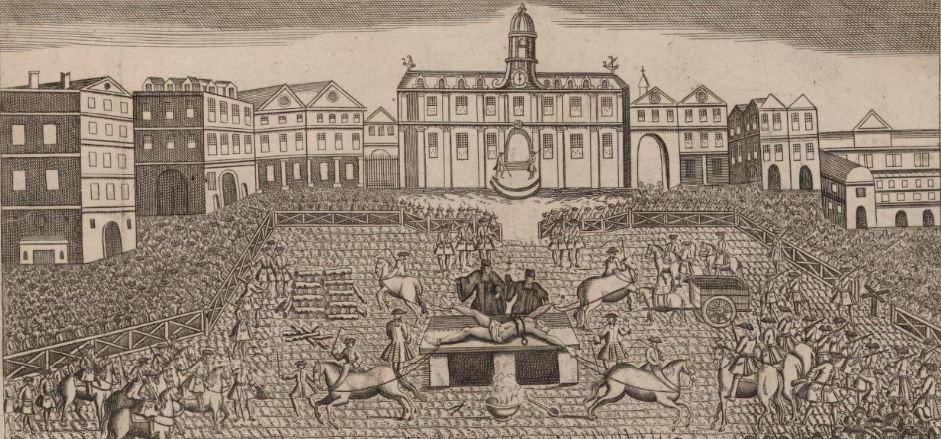
When Paris was still one of the largest wine-growing areas in France, ginguet was produced—particularly in the Belleville district—a low-quality but very inexpensive sparkling white wine. This ginguet was drunk directly at the homes of the farmers, whose inns were transformed, with the ginguet’s success, into… guinguettes.
A term that later more generally referred to the popular cabarets where Parisians came to drink and dance.
Faire un boeuf (to do an beef)
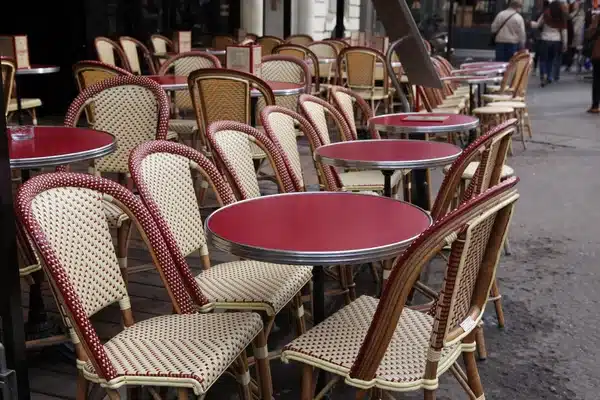
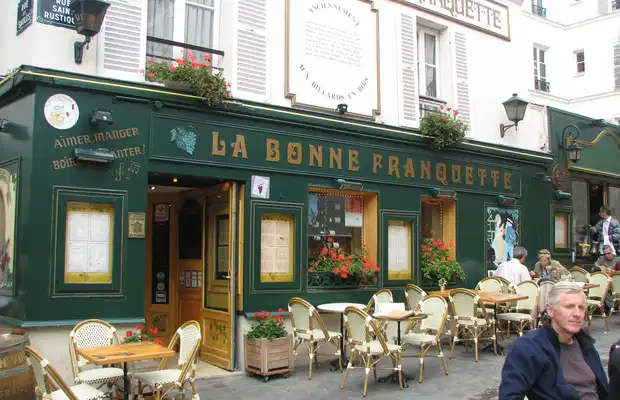
Definition: Organizing a small impromptu concert with musician friends. Origin: This expression comes from the Parisian cabaret Le Bœuf sur le Toit, a jazz mecca during the interwar period where all the biggest stars of the era gathered. Stars who, once drunk, didn’t hesitate to offer a small “boeuf” -> “beef” to the other customers of the venue. A very nice initiative!
La fin des haricots (the end of beans)
It’s been a dry summer, so there are no more beans in the garden? No way! The origin of this expression is much more surprising.
As Amédée de Ponthieu recounts in his Legends of Old Paris (1867), there once was, at the summit of the Sainte Geneviève mountain in the 5th arrondissement, a school famous for “its harsh discipline, its rigorous studies, and its meager meals.” The schoolchildren named the place “Hôtel des Haricots” (Bean Hotel), because of the immoderate use of this poor food. Then came the Revolution. It abolished the university barracks to turn them into a military prison “for recalcitrant National Guardsmen.” The place did not change its nickname, however. And we know that, as Anne Camberlin recalls, “for many prisoners, internment ended on the scaffold: the end of the beans.”
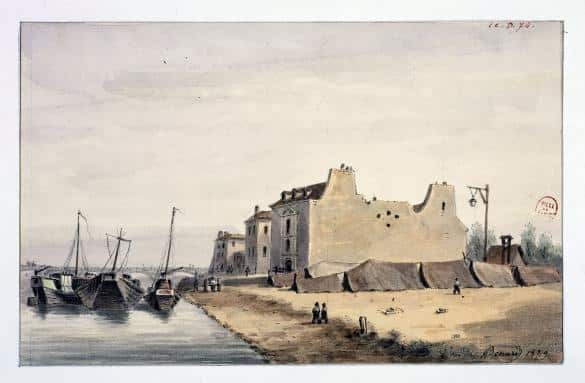
Payer en monnaie de singe (to pay in monkey money)
We must go back to “a French expression that originally evoked a kind of payment in kind. Today, it means using a currency that cannot be converted into money and, even more so, not paying one’s debts by this or that artifice.
According to the 13th-century Book of Trades, Saint Louis granted monkey trainers the right to pay the toll on the Petit-Pont, which connects Notre Dame Island to the Saint-Jacques district, in grimaces or sleight-of-hand tricks.” The toll collector could also grant free passage to a minstrel in exchange for a song or a fable.
Paying in a currency that has no real value, or even not paying at all. In the Middle Ages, it was necessary to pay a tax to use the bridge that connected the Île de la Cité to the Rue Saint-Jacques in Paris. Only jugglers, showmen, or entertainers who owned a monkey capable of performing a trick were exempt. They were paying the tax in monkey money, so to speak.
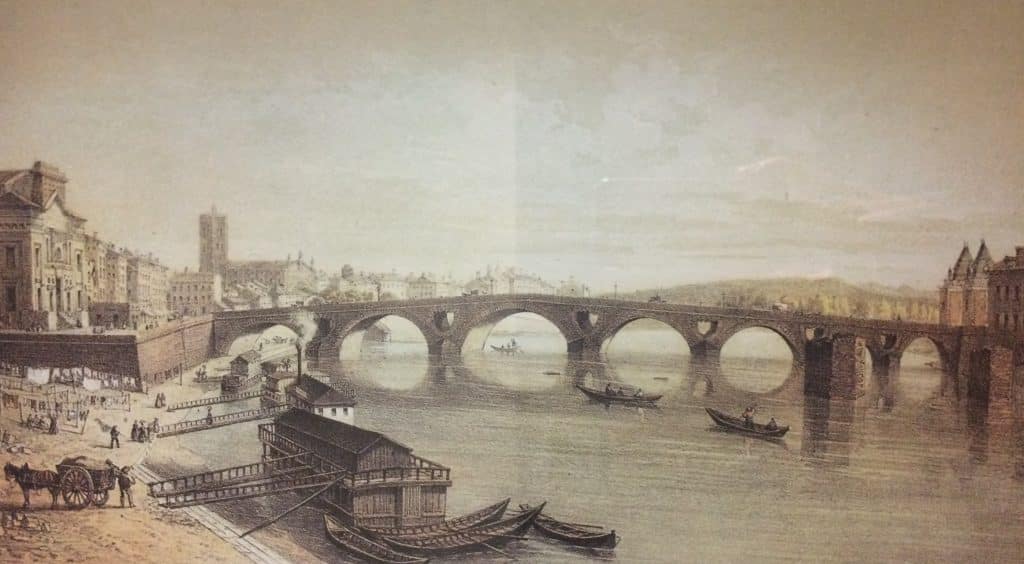
ça se bouscule au portillon (it’s jostling at the little gate)
In the past, ticket collectors were stationed at the ticket gates on Paris Metro platforms, creating a queue. This expression is therefore used to describe a sudden, large crowd, whether to enter a place or to obtain a job, a promotion, a service, etc.
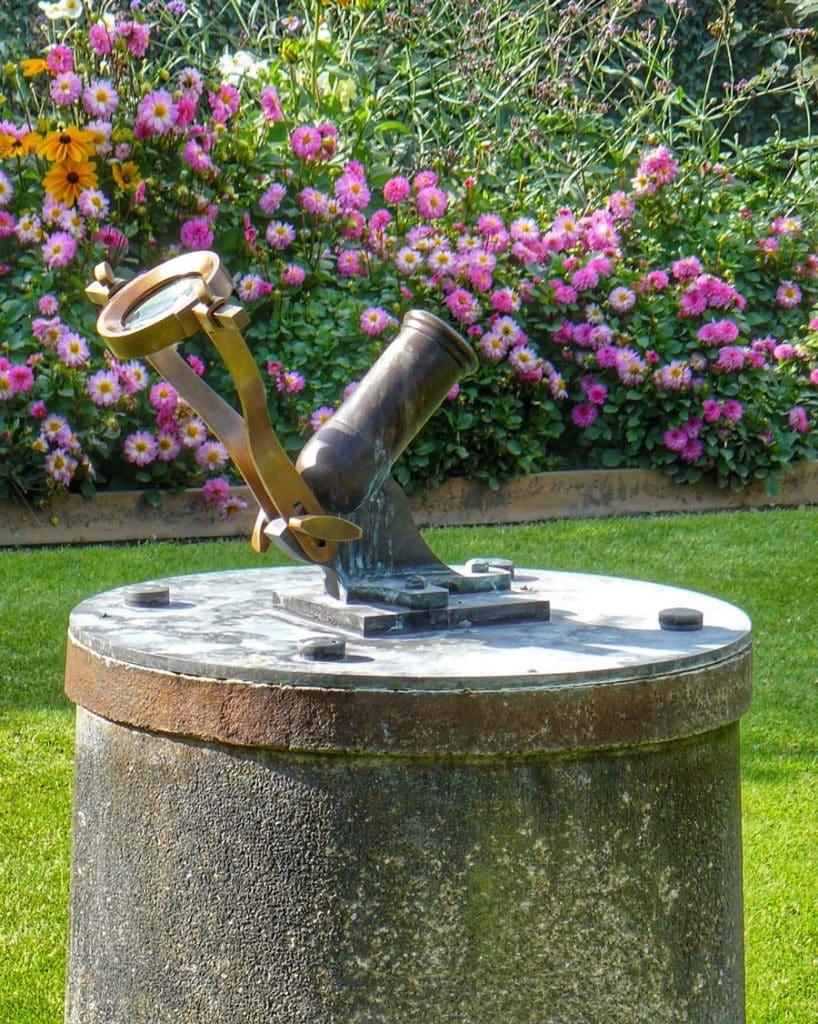
Midi pétante (sharp Noon)
“Be there at sharp noon,” that is, exactly at noon. In 1786, a small solar cannon was installed in the garden of the Palais-Royal in the capital. A magnifying glass focused the sun’s rays to ignite the gunpowder and produce a detonation at midday. It was created to reset the clocks in Paris everydays. Since then, this expression has been extended to all hours of the day.
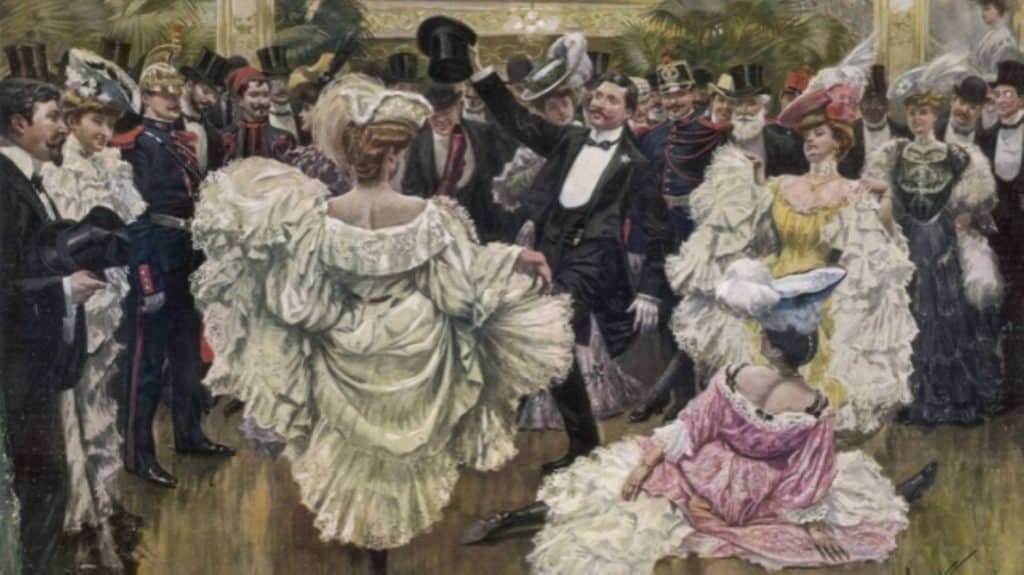
Faire la tournée des Grands-Ducs (touring the Grand Dukes)
Partying, bar hopping, spending lavishly… this is what the Russian Grand Dukes did in the late 19th and early 20th centuries when they visited Paris for pleasure.
Métro, boulot, dodo (metro, work, sleep)
This oft-used expression, which refers to a daily routine, was coined by a Parisian poet-bookseller: Pierre Béarn, who died in Paris in 2004 at the age of 102, a year after getting married. Famous for its repetition of -o sounds, a lot of people still use it today.
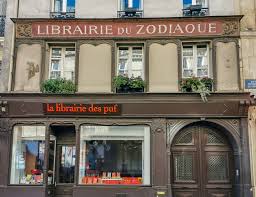
In 1968, he coined the expression “Métro-boulot-dodo” (Metro-work-sleep), based on a line from a poem in his collection Couleurs d’usine (Factory colors), published in 1951. In 1932, he took over the Librairie du Zodiaque, founded in 1924 by his friend Pierre Véry, located in the Latin Quarter at 60 rue Monsieur-le-Prince, and ran it until 1981.
This address is still the same as a bookstore, today the PUF (French Bookstore).
What if the secret to breaking out of the metro-work-sleep routine was hidden in bookstores?
Taking the title of Gaston Bachelard’s essay, Water and Dreams, this floating bookstore, moored on the Quai de l’Oise, a short walk from the Bassin de la Villette, houses thousands of books on travel, the sea, and nature in its hold.
Entrer à l’oeil (to enter on eye… yes)
That is, to enter a place that requires a fee for free. Its origins date back to the early 20th century when the “Brigade de la Mondaine” (the “Mondaine Brigade”) monitored Parisian brothels. Its inspectors wore a small eye on the lapel of their coat as a badge, which allowed them to enter without paying.
Bistro and Bistrot
The dictionary defines a bistro (or bistrot) as a café, a drinking establishment. However, in the past, this term could also refer to the owner of a café, always with a “t” at the end of the word, as we often see in Georges Simenon’s Inspector Maigret investigations:
“The bistro’s doubts lasted perhaps ten minutes longer. When Lucien announced that the editor wouldn’t arrive until the next day, the owner turned to Maigret again and murmured…”
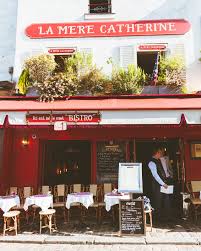
A bistro is a typically Parisian place for exchange and sharing; it’s a place where you feel good, like the Bistro des Oies, on Rue Marie et Louise, in the 10th arrondissement.
But where does this rather strange… even foreign-sounding… term “bistro” come from? The etymology of the word “bistro” dates back to 1814, at the time of the occupation of Paris by the cavalry soldiers of the Russian army of Tsar Alexander I, who used to shout “быстро, быстро”, pronounced “bristro, bistro” that is to say “Quickly, quickly” to ask for a drink quickly.
Epater la galerie (to impress the gallery), or Rester sur le carreau (remain on the tiles)
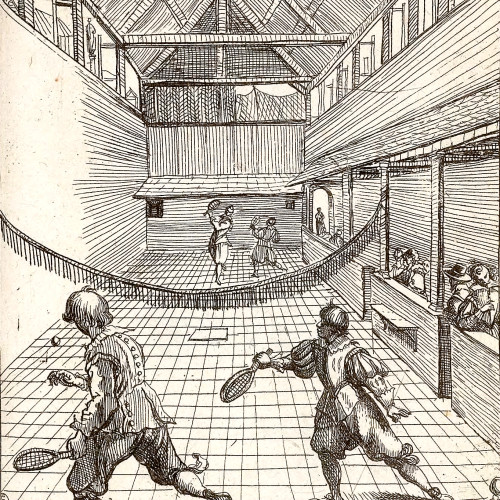
If I took you to the tennis court the day before yesterday, it wasn’t to impress the gallery, and even less to leave you on the tiles -> “leave you high and dry” !
These are two French expressions whose connection to the plam game is hard to imagine, a sport so popular with Parisians from the 13th to the 18th century. Everyone came there, either to play or to admire, as this excerpt from La Princesse de Clèves (1678) by Madame de La Fayette clearly demonstrates:
“A few days before the arrival of the Duke of Alba, the king played a game of tennis with M. de Nemours, the Chevalier de Guise, and the Vidame de Chartres. The queens went to watch them play, followed by all the ladies and, among others, Madame de Clèves.”
The players therefore sought to “impress the gallery,” or more precisely, the beautiful ladies who stood in the gallery, to the side. However, it was better for them to avoid “remaining on the tiles,” that is, falling onto the tiled floor of the tennis courts, and remaining there when defeated!
Se faire appeler Arthur (to be called Arthur)
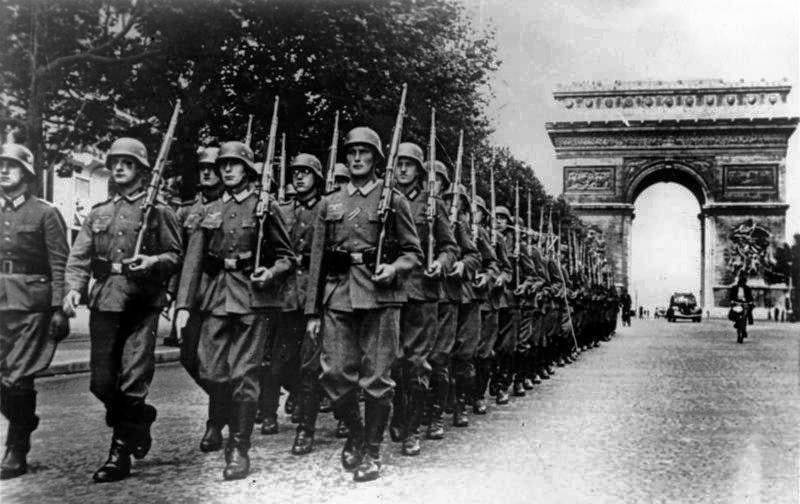
This is a rather strange expression for “to be told off.” It originated in occupied Paris.
The Germans had set a curfew at 8 p.m. Parisians who were seen after that time by the patrols patrolling the streets were called to order with these words: “Acht Uhr!”, which is pronounced almost like “Arthur”, and means “Eight o’clock!” in German.
While the situation this expression evokes is rather grim, the transformation of language it brought about is rather comical.
Jeu de main, jeu de vilain (hand game, villain game, or tennis?)
This expression, which is more commonly used today to tell children not to fight for fear of the game turning ugly, originates from the palm game.
Appearing in the 12th century, the palm game was a very popular sport in France until the 18th century. It was initially played bare-handed, with the “palm” of the hand, then a kind of racket was used, at least by the wealthiest, hence the expression “hand game, villain game,” the term “villain” meaning “peasant.” This new racket game corresponds to the birth of tennis, whose name comes from the verb “tenir” (to hold) in the second person imperative: “tenez” as pronounced by the person serving; this French word was adopted by the English and returned to the French in the form of “tennis,” a false English word in the dictionary!
In Paris, the number of tennis courts increased, to the point that there were 250 of them by the end of the 16th century. Parisians, especially nobles and kings, went there very regularly.
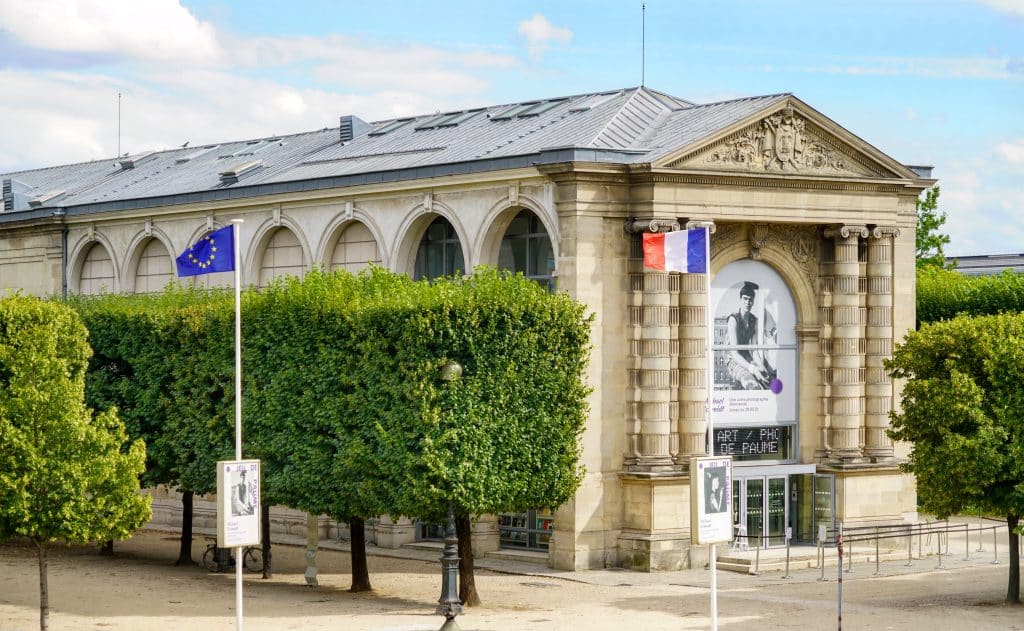
The Jeu de Paume in the Tuileries Gardens, built under Napoleon III, well after the great period of enthusiasm for this game, only retained this function until 1909, the date from which the building was dedicated to art exhibitions.
Entrer comme dans un moulin (enter like if it was a mill)
This expression, meaning “to enter easily somewhere, without embarrassment,” appeared at the beginning of the 19th century. Did people enter mills so easily then? No, not people, but donkeys! The donkey was used to turn the wheel to power the millstone but also to transport seeds to the mill. The donkey therefore entered several times a day, and each time, without knocking!
At the beginning of the 19th century, the expression was “enter like a donkey into a mill,” but with use, the word “donkey” disappeared, making the expression a bit enigmatic.
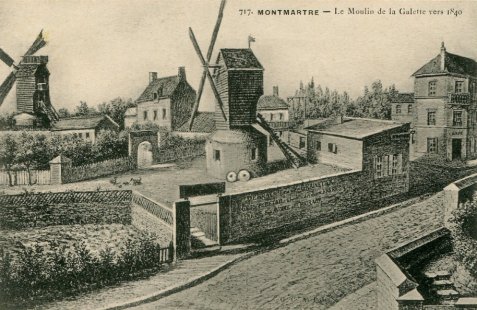
What connection could this have with Paris? There was a time when there were a lot of mills in Paris. Let us think of the Butte Montmartre which had 17. The Blute Fin and the Radet are today the two survivors (at 77 and 83 rue Lepic): they formed, with the gardens and the farm, the famous Moulin de la Galette complex, a popular dance hall, immortalized by Renoir.
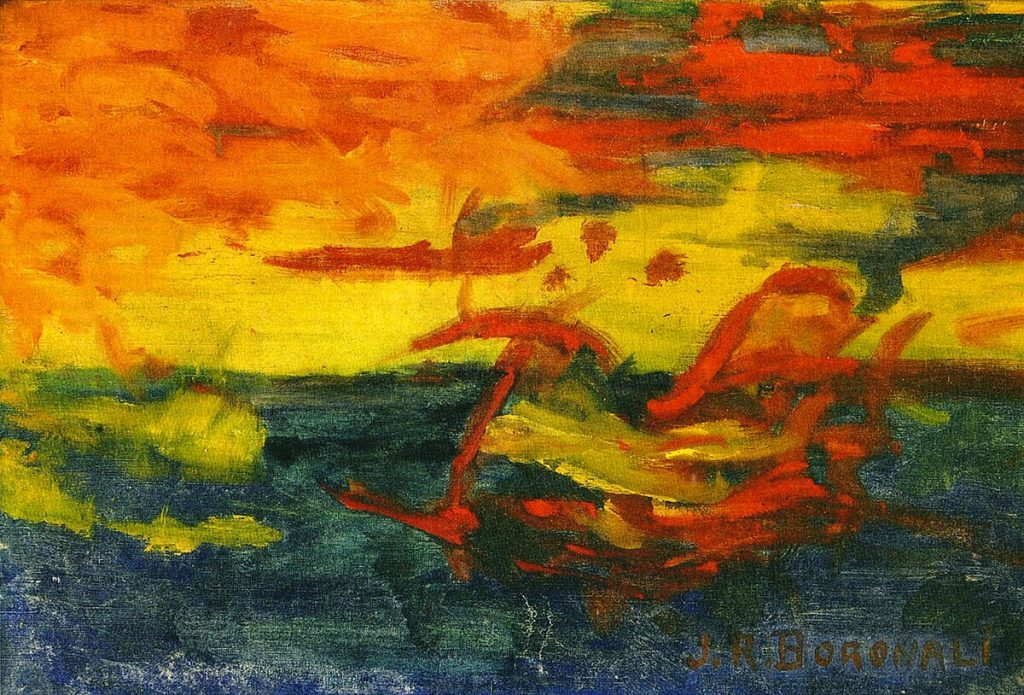
As for the donkey, there is no animal more Montmartre than him, just think of the famous Lolo from the good old Frédé of Lapin Agile, who drove the great Parisian art critics crazy with his painting with his tail: “And the sun fell asleep on the Adriatic”, which is here!
Chacun voit midi à sa porte (everyone see noon at its door)
This expression, meaning “everyone sees things their own way,” dates back to the time before smartphones and even before watches, since it dates back to the era of sundials.
Builders once installed sundials above doorways so that residents could easily check the time outside. However, since not all masons were experts in gnomonics, it wasn’t always noon at the same time!
In Paris, there are still some beautiful remains of these sundials above doorways, notably on the facades of the private mansions on the Ile Saint-Louis (Chenizot, Lambert, de Lauzun, etc.). Are they all properly adjusted?
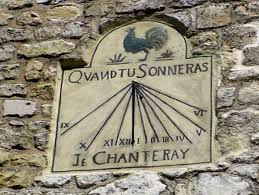
In any case, there’s no hiccup in Montmartre, where everyone is in tune thanks to Commander Henri Lachouque, historian of Napoleon I and the Grande Armée, who had a sundial installed on his house containing a victor’s motto.
When “you” ring, meaning when the bells of the Montmartre campanile ring the Angelus, “I,” aka the rooster on the sundial, will sing noon; this has been set like clockwork since 1924. Thus, no one in Paris will be able to see noon at two o’clock!

 /
/ 


